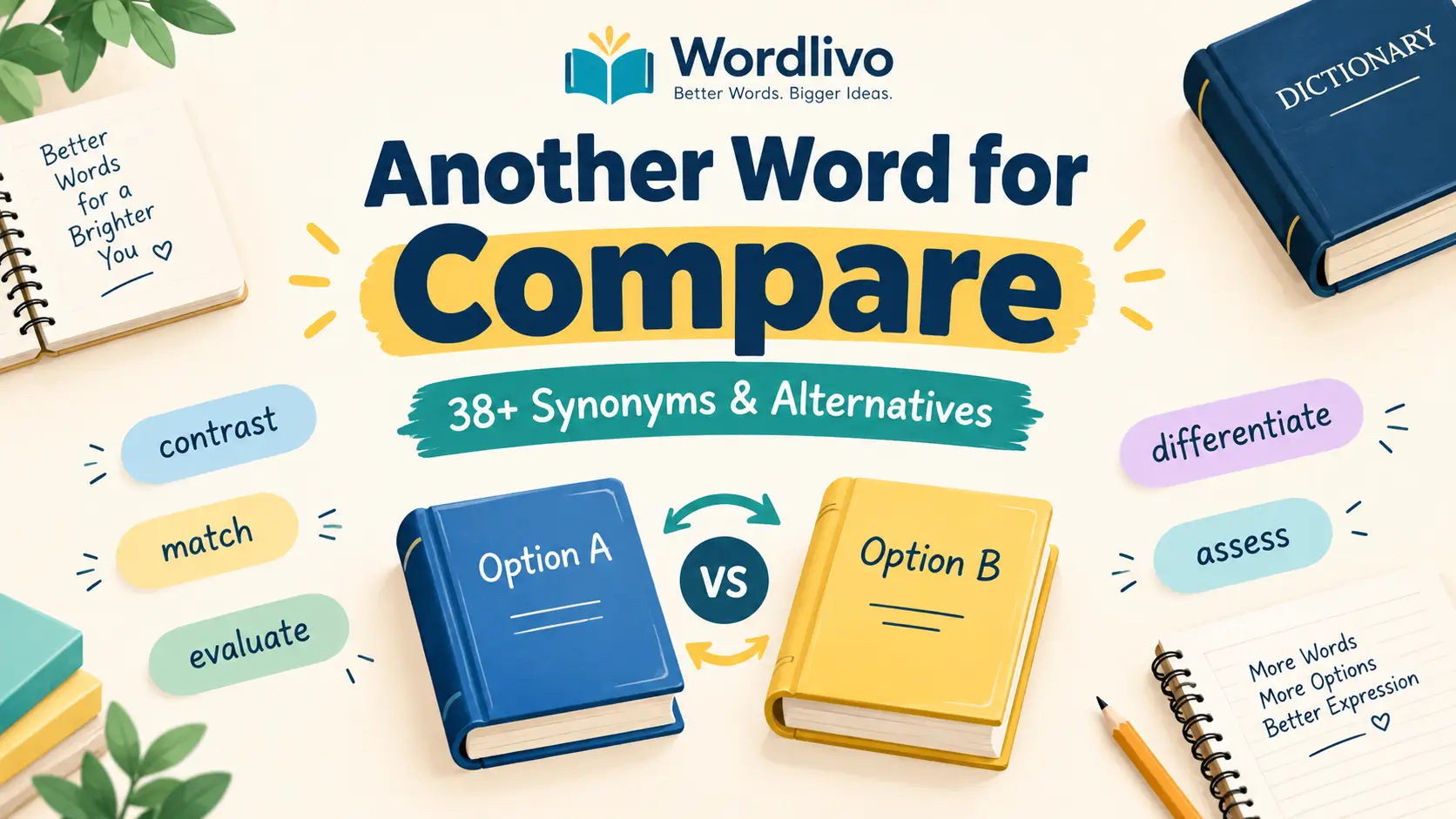
Another word for compare is “contrast,” “liken,” or “match.” These words mean you are looking at two or more things to find how they are the same or different.
People use them in school, work, shopping, and daily talk. They make writing sound less repetitive and more clear.
Picture this. You are standing in a store aisle holding two phone boxes, checking prices and camera specs before you pick one. That simple act has a name, and English gives you dozens of ways to say it without using the word “compare” every time.
A student writing an essay needs fresh words so their paragraphs don’t sound flat. A blogger wants variety so readers stay interested. A content writer needs synonyms to avoid keyword repetition that search engines flag as lazy.
And anyone using daily English just wants to sound natural, not robotic, when talking about prices, grades, or two job offers.
“Comparison is the thief of joy.” Theodore Roosevelt
Learning these words is not just about grammar. It changes how confident you sound.
“Words are, of course, the most powerful drug used by humanity.” — Rudyard Kipling
Quick Reference Table
Here’s a quick table before we dive into the full list:
| Word | Meaning | Example |
| Contrast | Show how two things are different | The two colors contrast nicely together. |
| Liken | Say one thing is like another | She liked her boss to a coach. |
| Equate | Treat two things as equal | Don’t equate wealth with true happiness. |
| Weigh | Think about which option is better | He will weigh both college offers. |
| Match | Check if two things are the same | Does this shirt match your shoes? |
| Parallel | Show two events happen alike | Her story parallels her sister’s life. |
| Differentiate | Point out what makes things different | Please differentiate the two products for me. |
| Evaluate | Judge the value of something | Teachers evaluate essays before giving grades. |
| Assess | Study something to form an opinion | We must assess both risks first. |
| Benchmark | Use one thing to test another | Analysts benchmark this stock against rivals. |
| Relate | Show a connection between things | This chart relates sales to weather. |
| Distinguish | Tell two similar things apart | Can you distinguish the twins apart? |
38 Another Words for Compare
1. Contrast
- Meaning: To show how two things are different from each other.
- Examples: The report will contrast last year’s sales. Teachers often contrast two poems in class.
2. Liken
- Meaning: To say that one thing is similar to another thing.
- Examples: He liked the storm to a wild animal. Critics liken her voice to a bell.
3. Equate
- Meaning: To treat or think of two things as being equal.
- Examples: People equate success with a big salary. Don’t equate silence with agreement here.
4. Correlate
- Meaning: To show that two things are connected or related somehow.
- Examples: Sleep and mood seem to correlate strongly. Scientists correlate diet with heart health.
5. Juxtapose
- Meaning: To place two things side by side to notice differences.
- Examples: The artist likes to juxtapose light and dark. She juxtaposed old photos with new ones.
6. Match
- Meaning: To check whether two things are the same or fit well.
- Examples: Try to match the paint colors exactly. His story didn’t match hers at all.
7. Weigh
- Meaning: To think carefully about two choices before deciding one.
- Examples: We should weigh both job offers carefully. She weighed the pros and cons quietly.
8. Measure Against
- Meaning: To judge one thing using another thing as a standard.
- Examples: New hires are measured against last year’s team. He measures himself against top athletes.
9. Parallel
- Meaning: To be similar to or happen alongside another situation closely.
- Examples: Her career parallels her father’s early years. This plot parallels a famous fairy tale.
10. Resemble
- Meaning: To look or seem like another person or thing somewhat.
- Examples: This building resembles an old castle tower. The twins resemble each other quite closely.
11. Differentiate
- Meaning: To recognize or point out what makes two things different.
- Examples: Buyers must differentiate between the two models. Doctors differentiate symptoms before treatment plans.
12. Analyze
- Meaning: To study something closely to understand its parts and value.
- Examples: Analysts analyze both companies before investing money. Please analyze these two paragraphs carefully.
13. Evaluate
- Meaning: To judge the value, quality, or worth of something carefully.
- Examples: Judges evaluate every dish at the contest. We evaluate vendors before signing any contract.
14. Assess
- Meaning: To study something in order to form a clear opinion.
- Examples: Coaches assess players during every practice session. The team will assess both marketing plans.
15. Examine Side by Side
- Meaning: To look closely at two things placed right next to each other.
- Examples: Let’s examine side by side both contracts today. She examined the samples side by side.
16. Draw Parallels
- Meaning: To point out how two separate situations are alike somehow.
- Examples: Historians draw parallels between both world wars. He drew parallels between the two speeches.
17. Set Against
- Meaning: To place one idea or thing next to another for contrast.
- Examples: The film sets modern life against ancient traditions. She set her plan against his budget.
18. Size Up
- Meaning: To quickly judge someone or something by looking closely.
- Examples: He sized up both cars before buying one. Coaches size up new players quickly enough.
19. Benchmark
- Meaning: To use one clear standard to test how good something is.
- Examples: Companies benchmark salaries against similar local businesses. We benchmark our app against competitors monthly.
20. Cross-Reference
- Meaning: To check information from one source against a different source.
- Examples: Editors cross-reference facts before the article publishes. Please cross-reference both spreadsheets for errors.
21. Relate
- Meaning: To show a connection or link between two separate things.
- Examples: This graph relates income to happiness levels. Her essay relates both books nicely together.
22. Associate
- Meaning: To connect one idea, person, or thing with another in thought.
- Examples: People associate red with danger or love. She associates rain with peaceful, quiet mornings.
23. Align
- Meaning: To check whether two plans or ideas fit well together.
- Examples: Make sure the budget aligns with our goals. His actions rarely align with his words.
24. Gauge
- Meaning: To judge or measure something, often using another thing first.
- Examples: Managers gauge morale by talking with staff. We gauged interest before launching the product.
25. Rate
- Meaning: To give something a score after judging it against others.
- Examples: Customers rate the two restaurants online often. Critics rate this film above the sequel.
26. Judge
- Meaning: To form an opinion about something after careful, honest thinking.
- Examples: Don’t judge a book by its cover. She judged both proposals fairly and quickly.
27. Distinguish
- Meaning: To notice or explain the difference between two similar things.
- Examples: Experts can distinguish real gems from fake ones. Try to distinguish fact from opinion here.
28. Note Similarities
- Meaning: To point out ways that two or more things are alike.
- Examples: Reviewers note similarities between the two novels. We noted similarities in both survey results.
29. Put Side by Side
- Meaning: To place two items next to each other for a closer look.
- Examples: She put the samples side by side quickly. Put both quotes side by side carefully.
30. Look at Differences
- Meaning: To focus on how two or more things are not alike.
- Examples: Let’s look at differences between both plans first. We looked at differences in each report.
31. Check Against
- Meaning: To test one thing by looking at another for accuracy.
- Examples: Always check your answers against the key. She checked the invoice against her receipt.
32. Test Against
- Meaning: To try something out using another thing as a fair standard.
- Examples: Engineers test the design against old models. We tested new code against older versions.
33. Collate
- Meaning: To gather and arrange information so it’s easy to review together.
- Examples: Please collate both reports before the meeting. She collated survey answers from every branch.
34. Tally
- Meaning: To count and match totals from two or more separate lists.
- Examples: Do these two totals tally with each other? The cashier tallied receipts against the register.
35. Rank
- Meaning: To put things in order based on quality, size, or value.
- Examples: Teachers rank essays from best to weakest. Websites rank products by price and reviews.
36. Weigh Up
- Meaning: To think about all sides before choosing between two options.
- Examples: Weigh up both offers before you decide. He weighed up the risks pretty carefully.
37. Stack Up Against
- Meaning: To see how one thing compares in quality to another thing.
- Examples: How does this laptop stack up against others? Her resume stacks up against top candidates.
38. Hold Up Against
- Meaning: To test whether one thing is as good as another thing.
- Examples: This budget phone holds up against pricier models. His argument doesn’t hold up against facts.
Another Word for Compare and Contrast
When teachers ask students to look at two texts, they often say “compare and contrast.” A simpler way to say this is to “weigh similarities and differences” or “draw parallels and contrasts.” This phrase shows up constantly in essays, book reports, and classroom instructions.
Using a fresh phrase like “set side by side” instead keeps your writing sharp and avoids sounding repetitive across every paragraph you write.
Another Word for Compare Prices
Shoppers do this every day without even thinking about the word itself. Instead of saying “compare prices,” try “check prices against each other” or “shop around.” These phrases feel more natural in casual talk, blog posts, and product reviews.
Retail writers often use “price-match” too, especially when guiding readers toward smarter, more budget-friendly buying decisions online or in stores.
Another Word for Compare Two Things
Sometimes you just need one simple option here. Try “hold two things up together,” “line them up,” or “put them side by side.” These casual phrases work well in speech and informal writing.
They sound less academic than “compare” and fit naturally into everyday conversations about food, movies, or even choosing between two weekend plans.
Another Formal Word for Compare
Formal writing, like reports and academic papers, calls for stronger word choices. Try “evaluate,” “assess,” or “juxtapose” instead. These words carry a more professional tone and fit well in business documents, research papers, and cover letters.
“Benchmark” also works nicely when you’re formally measuring performance, cost, or quality against a clear, established standard.
Another Word for Compare Notes
This common phrase means sharing information to check agreement. Say “cross-check,” “swap findings,” or “align details” instead. Coworkers “compare notes” after meetings, and students do it after exams.
Using “touch base and compare” or simply “check in together” keeps the same friendly meaning while sounding a little less overused in daily office or classroom conversation.
Frequently Asked Questions
What can I say instead of comparing?
You can say “contrast,” “match,” “weigh,” or “juxtapose” instead of comparing. Each word fits a slightly different situation. “Contrast” works best when you’re focused on differences, while “match” fits better when checking similarity.
Choosing the right synonym depends on your sentence, your audience, and whether you’re writing something casual or formal for school or work.
What is another word for “compare”?
A simple another word for compare is “contrast” or “liken.” Both words are common and easy for any reader to understand quickly. “Contrast” leans toward differences, while “liken” leans toward similarity.
Pick whichever direction fits your sentence, since English rarely has one perfect synonym that covers every single situation completely and equally well.
What is the synonym for comparative?
Synonyms for “comparative” include “relative,” “relational,” and “proportional.” These words describe something measured against another standard. For example, a “comparative study” could also be called a “relative analysis.”
This kind of language shows up often in science, statistics, and academic writing where two or more results need careful side-by-side measurement.
What are 5 good synonyms?
Five solid synonyms for “compare” are “contrast,” “liken,” “match,” “weigh,” and “evaluate.” Together they cover most everyday situations, from casual chats about prices to formal essays and business reports.
Keep this short list handy, and you’ll rarely repeat the word “compare” awkwardly again in your writing.
Conclusion
Learning another word for compare does more than fill space in a sentence. It makes your writing feel alive instead of repetitive, and it helps readers stay interested from the first line to the last.
Whether you’re a student polishing an essay, a blogger chasing better rankings, or someone simply chatting about which phone to buy, having several words ready means you never get stuck searching for the right one.
“The limits of my language mean the limits of my world.” Ludwig Wittgenstein
Try using a few of these words this week. Swap “compare” for “weigh,” “contrast,” or “benchmark” in your next email, essay, or social post. Small changes like this build big habits over time, and soon these words will come to you naturally, without any second thought at all.
“Language is the road map of a culture.” Rita Mae Brown
Keep this list nearby, practice often, and your writing will keep growing sharper, clearer, and more confident with every single new sentence you write.

Sarah Thompson is an English language writer for WordLivo.com, covering vocabulary, synonyms, and everyday word usage. She focuses on simple explanations and practical examples that make English easier to understand and use.